MIKROE-4977

Mikroe
932-MIKROE-4977
MIKROE-4977

メーカ:

詳細:
LED 照明開発ツール LED Driver 12 Click

在庫: 6

在庫:
6 すぐに出荷可能
最小: 1   倍数: 1
ユニット価格:
¥-
合計 額:
¥-
EST関税:

価格 (JPY)

数量 ユニット価格
合計 額
¥3,654.2 ¥3,654

製品属性 属性値 属性の選択
Mikroe
製品カテゴリー: LED 照明開発ツール
RoHS:  
Add-On Boards
3.3 V to 5 V
ブランド: Mikroe
最高動作温度: + 85 C
最低動作温度: - 40 C
出力電流: 25 mA
製品タイプ: LED Lighting Development Tools
工場パックの数量: 1
サブカテゴリ: Development Tools
製品が見つかりました:
類似製品を表示するには、チェックボックスを1つ以上選択します
このカテゴリーの類似製品を表示するには、上記のチェックボックスを1つ以上選択してください。
選択した属性: 0

コンプライアンスコード
USHTS:
8537109170
ECCN:
EAR99
原産地分類
原産国:
セルビア
組立原産国:
入手不可
拡散国:
入手不可
出荷時に原産国または地域が変更される場合があります。

Display Click Boards

Mikroe Display Click Boards allow for adding LCD, OLED, and various other display options for applications and designs. Mikroe Click Boards are based around the mikroBUS™ interface standard and easily add incredible system capabilities. The devices are ideal for any application where a display is needed.

31FL323x LED Lighting Development Boards

ISSI 31FL323x LED Lighting Development Boards are development tools that evaluate ISSI multi-channel LED drivers. LED drivers are electrical circuits used to power light-emitting diodes. The fully assembled and tested board is powered by the Arm® Cortex®-M3 or 80C51 (IS31FL3235A-QFLS2-EB) with a 5V operating supply voltage. The evaluation boards have multiple display modes.

IS31LT3360 Demonstration Board

ISSI IS31LT3360 Demonstration Board is a fully assembled and tested PCB that uses the IS31LT3360 continuous mode inductive step-down converter. This ISSI board is designed to drive single or multiple series connected LEDs. This performance is achieved efficiently from a voltage source higher than the LED voltage.

LED Driver 12 Click

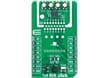
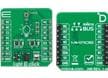
Mikroe LED Driver 12 Click features the NXP Semiconductors PCA9532 16-bit I2C-configurable I/O expander optimized for dimming LEDs. The PCA9532 offers high efficiency, supporting up to 16 LED channels. It delivers a maximum of up to 25mA of LED current per channel. It contains an internal oscillator with two user-programmable blink rates and duty cycles coupled to the output PWM. Any bits not used for controlling the LEDs can be used for GPIO expansion, which provides a simple solution when additional I/O is needed for some sensors, push-buttons, or alarm monitoring.